Friday, June 3, 2011

Aconitum: Toxic Perennial if Taken Internally

 
Image courtesy of Van Hoorn Nurseries.Aconitum is one of several impressive blue perennials used as background plants in English style gardens. The tall pure blue varieties make nearby pink flowers so vivid-looking that I needed to include Aconitum in my own garden. However, my eagerness for them ebbed when I found these plants at the nursery with a cautionary sign hanging over them that read: this plant is poisonous. Naturally, I chose not to buy. There have always been children playing in or near my flowerbeds. I did not want to deliberately create a scenario that might endanger them.
This stately perennial, also known as Monkshood, is one of the most poisonous of plants. Since ancient times, people have known that it is toxic and have used it as a weapon by coating their spear and arrow heads with its strong poison in order to kill wild animals. Some gardeners believe that this popular garden plant has such a distinctive and unpleasant taste that cases of accidental poisoning are rare, though known. However, all parts of the plant are toxic if eaten and its roots may be fatally mistaken for edible crops if left lying around. Even the abraded skin of a gardener can absorb a dangerous dose of its poison.
 
Image courtesy of Glenlea GreenhousesSome brave gardeners feel that handling the plant itself is not a problem and there is no reason not to grow it. I argue that if Aconitum were to be planted in ample-sized flowerbeds, such as those on large estates, one might not be so anxious about accidental poisoning. However, in tight urban flowerbeds, where gardeners often collide with their flowers, the possibility of a fatal accident is real.
Here are some of the symptoms of Aconitum poisoning: Burning of lips and mouth, numbness of throat, intense vomiting and diarrhea, muscular weakness and spasms, weak pulse, paralysis of the respiratory system and convulsions. Did you ever expect to read something as gruesome as this in a gardening blog?
Nevertheless, if a reader is determined to grow Aconitum, here is what one needs to know: This tall plant grows stalks that are so strong they do not need staking. There are many varieties of Aconitum, ranging in heights of 18 to 48 inches tall. The color palette includes white, pink and blue. The tall blue varieties are the most desirable because of the purity and intensity of their color. This perennial will grow in full sun or light shade but flowers get floppy with reduced sunlight. Aconitum performs best with a minimum of six hours of full sun every day. This plant blooms in late summer to early fall and is happiest in moist, fertile soil.
As soon as the first flowering flush is over, cut the bloom stalks to the ground to prevent seed development. This will encourage re-blooming later in the summer. Always wear gloves, long sleeved tops and long pants when gardening near this plant. Avoid placing Aconitum close to vegetable gardens or children’s play areas. Depending on the variety selected, this plant will grow in zones 2 to 8. I cannot suggest specific cultivars because I do not grow this species. As breathtaking as this perennial may be, the sounds of children playing touches me deeper.

Aconitum Flower nice view

Aconitum
Aconitum
Aconitum
Aconitum

Wednesday, June 1, 2011

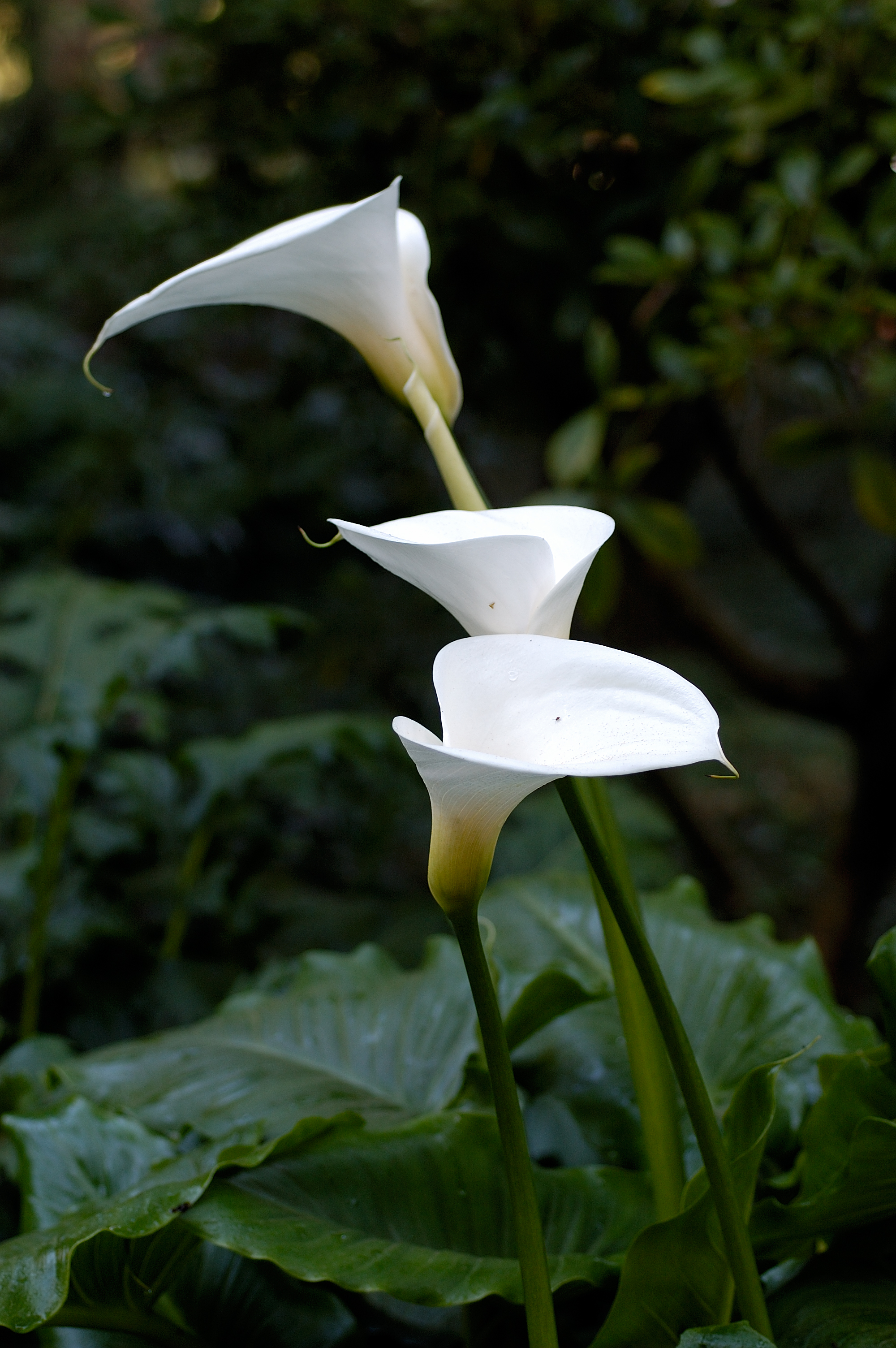
Calla Lily


This is Zantedeschia aethiopica – the Calla Lily. The amazing thing is that I lost it for at least two years. It just disappeared and yet this year it has quite happily been resurrected, putting forth its lovely spotted leaves and trumpet-shaped flowers. It is in a plant pot so I can only conclude that the pot was in a location it didn’t like and so the tuber remained dormant.


Apple mint


Apple mint (sometimes called woolly mint) (Mentha suaveolens) is a member of the mint genus that ranges through southern and western Europe and the western Mediterranean region. It is a herbaceous, upright perennial plant that is most commonly grown as a culinary herb and/or ground cover. It typically grows to 40-100 cm tall and spreads by rhizomes to form clonal colonies. The foliage is light green and can be variegated, with the opposite, sessile leaves being oblong to nearly ovate, 3-5 cm long and 2-4 cm broad. They are somewhat hairy on top and downy underneath with serrated edges.

Hostas

Hosta francee


Most of my Hostas are either in the shade of the front wall of the house (which faces North) or under the trees of the back hedge. Those by the wall tend to be kept clear of slugs and snails by the surrounding gravel. At one time those under the hedge were kept OK by the Hedgehogs eating the slugs and snails – the Hedgehog home was right by the Hostas. either this year the Hedgehogs have moved on or they are not doing their job properly.

The above photo was taken in July 2005. The ones below were taken the other day and it was hardly possible to find a single leaf that hadn’t been chewed.


Buddleias Flower


I have a number of different forms of Buddleia in the garden including Nanho Blue, Pink Delight and the gorgeous rich dark Black Knight. The ones which seem to be most attractive to the butterflies are Nanho Blue and the common un-named form.
We had Speckled Woods, Comma and Large Whites in the garden today.

Zantedeschia Amazing and Natural Beauti

Zantedeschia
Zantedeschia
Zantedeschia
Zantedeschia
Zantedeschia
Zantedeschia